 SPAIN
Navantia Completes Shore Tests of AIP Section for Spanish Submarine S-83 Cosme García
Navantia has finished testing the air-independent propulsion section of S-83 Cosme García at Cartagena before it is joined to the hull. S-83 will be the first S-80 boat to enter service with AIP.
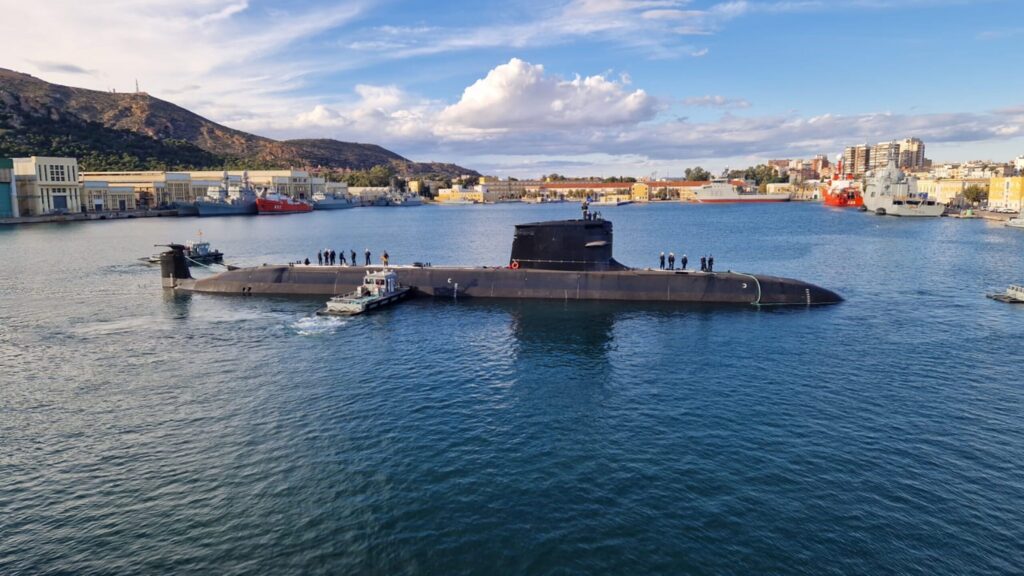
Navantia has finished testing the air-independent propulsion system fitted in a hull section of the Cosme García (S-83), the third of four S-80 class submarines it is building for the Spanish Navy at Cartagena, the company said.
The section is 12 meters (39 feet) long and weighs about 400 metric tons. It is still separate from the rest of the boat and will be joined to the pressure hull now that the tests are done.
Testing in a Simulated Submarine
Trials began in June, after the equipment was commissioned and verified in its actual onboard configuration. The section sits in a test facility at Cartagena that Navantia describes as the only one of its kind in the world. The rig simulates the forward and aft parts of the submarine and real operating conditions, including diving depth and speed.
Testing opened with the first loading of liquid oxygen and bioethanol. Navantia said the system showed it could generate power to charge the batteries while submerged, across a full range of operating conditions.
The system had already passed factory acceptance tests ashore and had recharged the batteries of S-81, the first boat in the class. Navantia said the new campaign will help it plan harbor acceptance trials of the system, which come after S-83 is launched.
Hydrogen Made on Demand
Air-independent propulsion lets a conventional submarine produce electricity underwater without running its diesel engines. Navantia rates its version as third generation. It does not store hydrogen. Instead it makes hydrogen on demand from bioethanol and liquid oxygen, and a fuel cell turns that hydrogen into electrical power.
Navantia says this will let S-80 boats stay submerged for weeks. Conventional submarines that rely only on lead-acid batteries typically last a few days before they have to come close to the surface to run their engines, which raises the risk of detection.
Where the Four Boats Stand
S-83 will be the first S-80 submarine to enter service with the system installed. The lead boat, Isaac Peral (S-81), is in service. Narciso Monturiol (S-82) is in harbor and sea trials, while S-83 and S-84 are at different stages of construction at Cartagena.
“All of this further confirms the technological maturity of the system and demonstrates the national industry’s capacity for innovation and for delivering complex technological developments,” said Navantia chairman Ricardo Domínguez.

 SURFACE FLEET · 21 NOV
 SURFACE FLEET · 21 NOV
 SURFACE FLEET · 21 NOV

 UNCREWED · 21 NOV