 UNITED STATES
Court Orders Navy to Reevaluate Saildrone’s Spectre Bid in $2.1B MUSV Program
The US Court of Federal Claims set aside the Navy's exclusion of Saildrone from the Medium Unmanned Surface Vessel competition and capped production commitments at $1.5 billion until the bid is reassessed.
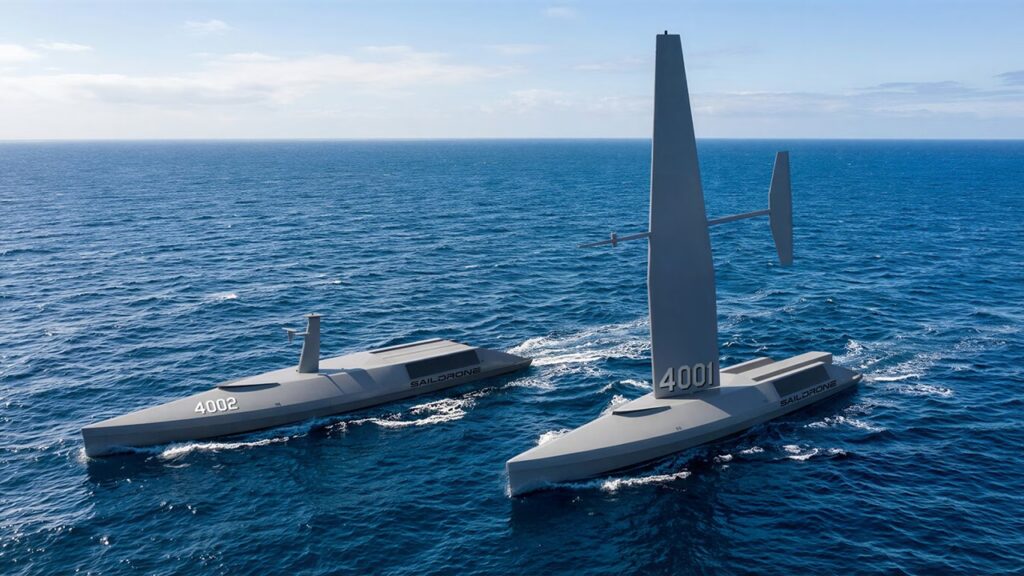
The US Navy must take a second look at Saildrone’s Spectre vessel before it can spend most of the money set aside for building medium unmanned surface vessels. A judge at the US Court of Federal Claims has set aside the service’s decision to drop the Alameda, California, company from the Medium Unmanned Surface Vessel (MUSV) competition, Saildrone announced on November 2.
The court ordered the Navy to promptly reevaluate the proposal using the same criteria it applied to the other bidders. Until that happens, the Navy cannot commit more than $1.5 billion of the program’s $2.1 billion to production, according to the company.
How the Bid Was Knocked Out
Saildrone went to court in July after the Navy judged its proposal non-compliant on all three evaluation criteria in the MUSV solicitation. The company said its offer met or exceeded every mandatory requirement.
Once Saildrone challenged the findings, the Navy dropped two of the three non-compliance determinations, the company said. Judge Hadji then rejected the last one, finding that the Navy had applied arbitrary and capricious criteria to Saildrone that it had not used elsewhere in the competition.
The ruling puts Saildrone back in line for evaluation. It does not hand the company a contract.
What Is at Stake for the Fleet
MUSV is part of the Navy’s push to grow its fleet of unmanned surface vessels, which are meant to operate alongside crewed warships across a range of maritime missions. The cap on production spending stays in place until the Navy completes the new assessment of Saildrone’s offer.
Saildrone designs, builds and operates unmanned surface vehicles for civil, commercial and government customers. The company says its platforms combine AI, sensors, secure communications and long endurance, and use a modular design that can take customer or partner payloads.
“Saildrone has spent over a decade proving itself at sea, pioneering unmanned maritime intelligence in some of the harshest ocean environments and hostile operational combat situations,” said Richard Jenkins, Saildrone’s founder and chief executive.
“The future of naval warfare will be fought on the water, not in a courtroom,” Jenkins said. “We are eager to move beyond this litigation and return our entire focus to delivering world-leading maritime autonomy for the US Navy, to help secure America’s future maritime dominance. This ruling is a win for fair competition, for taxpayers, and for national security.”

 SURFACE FLEET · 21 NOV
 SURFACE FLEET · 21 NOV

 UNCREWED · 21 NOV